
Four Major Fires Are Burning Across Western Colorado Now
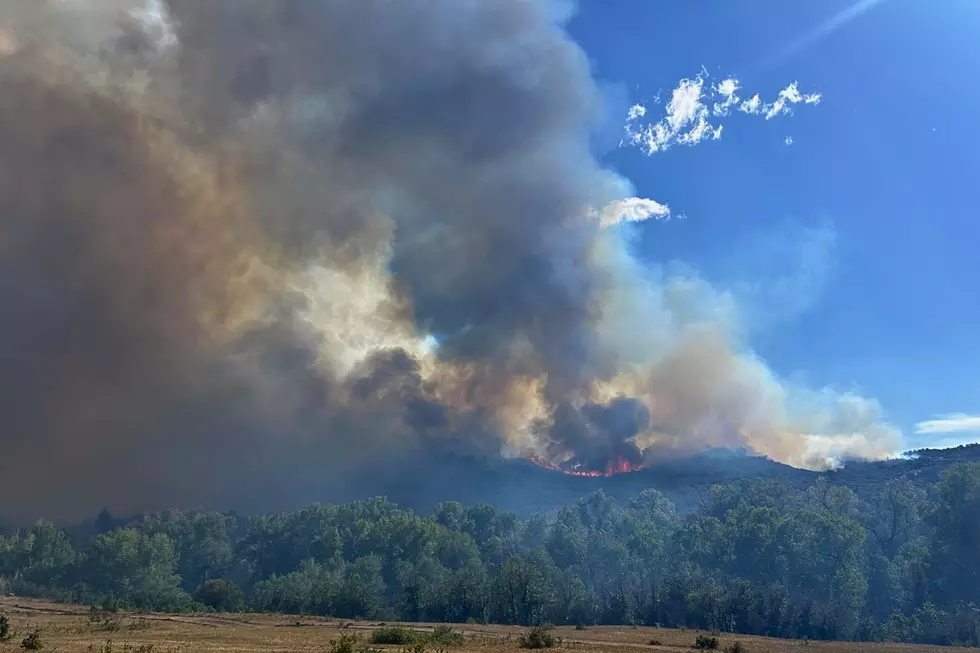
Wildfire season on the Western Slope has roared to life this July. Smoke can be seen filling the skies from Grand Junction to Montrose, with four major fires burning across the region. Keep scrolling for the latest updates on the Deer Creek, South Rim, Sowbelly, and Turner Gulch Fires.
From the “firenado” within the Deer Creek Fire to the Black Canyon of the Gunnison National Park evacuations, each fire has first responders working around the clock in extreme heat and high winds. Here’s what you need to know before planning travel or outdoor activities.
Deer Creek Fire and the ‘Firenado’
Read More: Is Your Home Ready? 2025 Fire Season in Western Colorado
The Facebook video above was shared by Brian Schnee and depicts a massive "firenado" spinning toward Colorado from south of the La Sal Mountains in Utah on July 12th. The Deer Creek fire has been burning since July 10th, when it began on private property about 18 miles south of Moab.
The fire has crossed into Colorado and is about 10 miles west of Paradox, Colorado, burning more than 12,000 acres. This fire is estimated at 7% containment. The Deer Creek Fire is the largest wildfire in Western Colorado, with more than 385 firefighters, airtankers, dozers, and engines on site. The estimated cost of suppressing this fire has grown to around $4,800,000 according to fireweatheravalanche.org.
South Rim Fire: Closures at Black Canyon of the Gunnison National Park
Read More: How To Protect Your Home From Colorado’s Wildfire Season
Winds have helped feed the South Rim Fire in Montrose County, as the blaze has grown to around 4000 acres with 0% containment as of early July 15th. More than 300 personnel, aircraft, bulldozers, engines, and retardant drops have estimated costs to battle the fire nearing $3,900,000.
The Black Canyon of the Gunnison National Park Remains closed. East Portal Road along the Gunnison River is inaccessible, and Hwy 347 in Montrose remains closed. Portions of Blue Mesa Reservoir (West End) and surrounding roads are being closed to allow crews to access water to fight the fire.
Sowbelly Fire (Dominguez‑Escalante National Conservation Area)
Of all the fires in Western Colorado, the Sowbelly Fire seems stable at 2,274 acres. There is 0% containment, so this can change quickly. BLM crews have about 75 firefighters working on the Escalante Canyon Rim to keep the fire from spreading. Evacuations in the area are ongoing. Estimated costs for this fire have climbed to around $500,000 according to fireweatheravalanche.org.
Road closures around this fire include: Escalante Canyon Road (Delta County, ZS Road, and 36 4/10 Road: Closed (Rim Road Intersection), YS Road, and 31 55/100 Road: Closed (Rim Road Intersection), 650 Road is closed.
Turner Gulch Fire: Evacuations & Growth
The Turner Gulch Fire exploded in size from July 14th to 16th, nearly doubling in size overnight to a burned area of 12,350 acres. The Rocky Mountain Incident Management Team 1 has moved in to manage this fire, which is 0% contained as of July 15th. Evacuations & highway closures are taking place along Highway 141 between mile markers 120 and 137. The Mesa County Sheriff’s Office has opened an Evacuation Center in Clifton at 3270 D 1/2 Road. According to fireweatheravalanche.org, about $1,817,327 has been used to suppress this fire in Mesa County.


LOOK: Colorado Wildfire Damage by Year, Number of Fires + Acres Burned
Gallery Credit: Tim Gray
NEXT: 10 Tips to Prevent Wildfires from the US Department of Interior
Gallery Credit: ASHLEY SOLLARS
MORE: Colorado's 20 Largest Wildfires of All Time
More From 99.9 KEKB - Grand Junction's Favorite Country